
Understanding Iron Deficiency and Anemia Beyond the Surface
A note on what's coming this July — and how we're going to do it differently

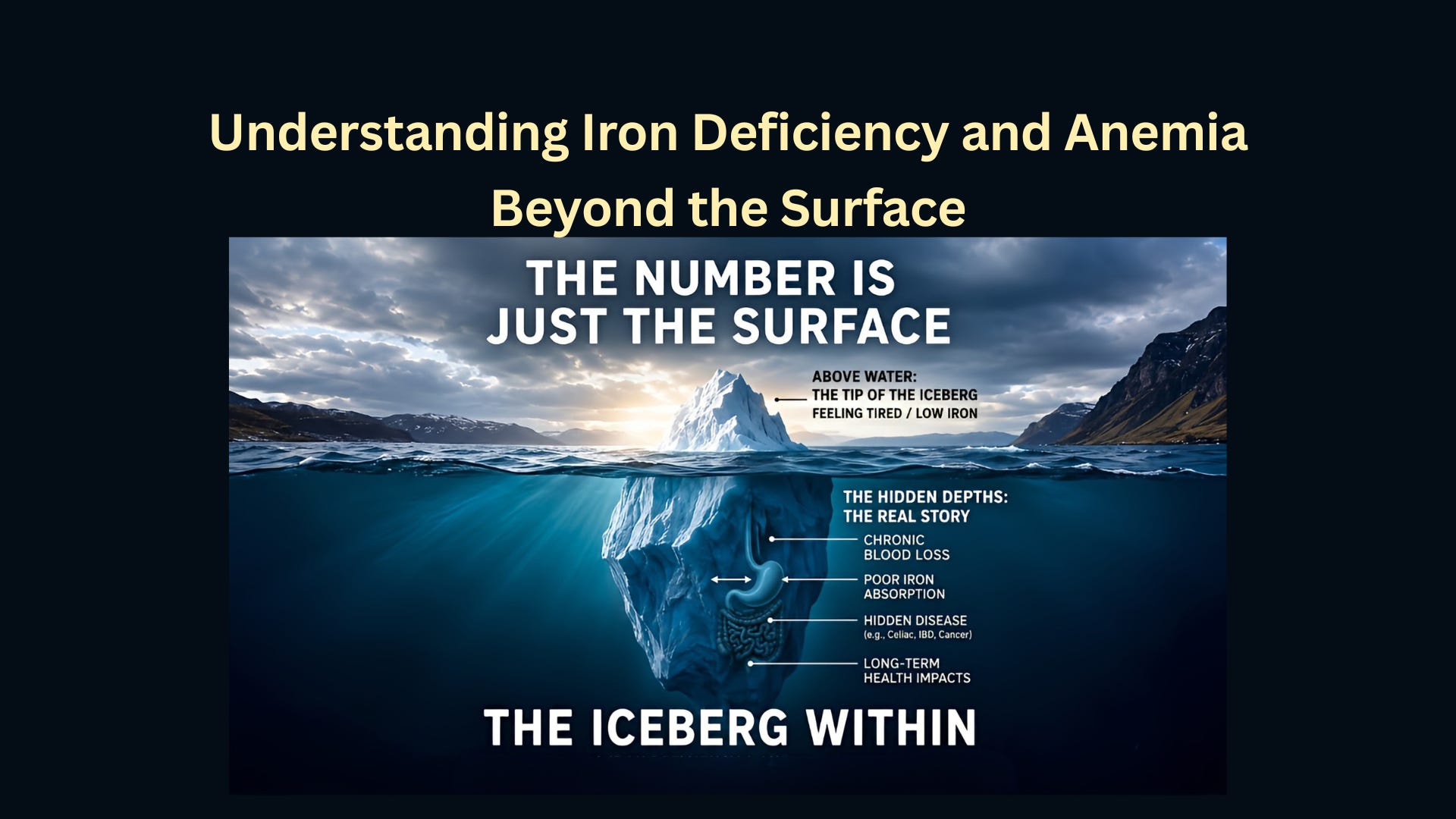
I’ve spent the last stretch buried in the research on iron — reading the literature, following the threads, filling a whiteboard. It turns out to be a bigger, stranger, and more important subject than most people realize, and I wanted to understand it properly before writing a single word of it for you.
A little while ago, I asked what you most wanted me to dig into. 83 of you answered — thank you for that. More than 40% asked for the relevance of iron: more than any other single topic, by a clear margin. So that settles it. For the month of July, we’re doing iron.
The rest of your requests aren’t forgotten. A lot of you asked about magnesium, and a good number asked about mushrooms and other wellness products, what they actually do, and whether you should be taking them at all. Those are coming in the weeks after. I’ve kept every response, and I’m building this around what you told me you need.
Here’s how we’re going to do iron: with the hype stripped out. I want to take what is essential and give you honest feedback about what an iron deficiency actually means. This is not a nudge toward the supplement aisle — I’d genuinely discourage that. And it is not “go eat a steak,” either. Both of those answers skip the only question that really matters.
Because a low iron reading is not the headline. It’s a clue. When a deficiency shows up, the reflex, even for a lot of doctors, is “let’s add some iron and move on.” But adding iron isn’t the thing to be concerned about. The concern is that the deficiency indicates something in the system isn’t right.
Think about it this way.
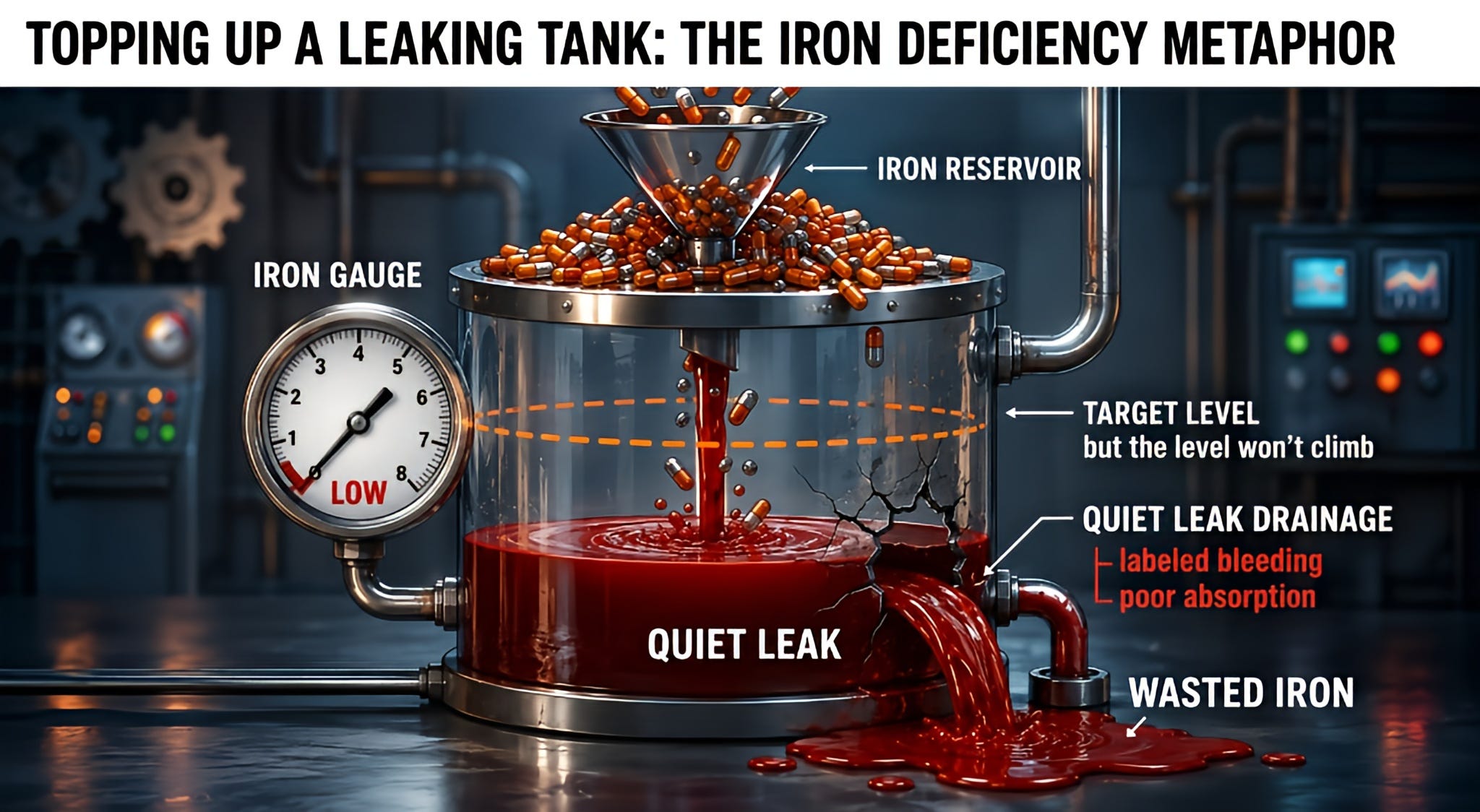
If your iron is low because of what’s on your plate, then yes — diet and supplementation will fix it. But if it’s low because something inside you isn’t working the way it should — say your gut isn’t absorbing iron properly — then the low iron isn’t really a diet problem at all. It’s a message about your gut. Same number on the lab report, a completely different problem underneath. Pouring more iron on top of an absorption problem is like topping up a tank that’s quietly leaking.
And it runs the other way, too. Too much iron — over-supplementation — is its own risk, and we’ll cover that just as honestly. More is not automatically better.
So over July, this is the ground we’ll cover, piece by piece, over the coming weeks:
What iron actually does in the body, far more than “makes blood”, and what it feels like when it runs low, or when there’s too much of it
The symptoms worth noticing, including the quiet, easy-to-dismiss ones that most people (and plenty of articles) skip right past
What those symptoms can be linked to, from the everyday (heavy periods, low dietary iron, frequent blood donation) to conditions a deficiency can quietly signal: celiac disease, a slow-bleeding ulcer, H. pylori, a gut that isn’t absorbing properly, and, in some cases, something as serious as colorectal cancer
Why “just take iron” can be the wrong move, the difference between not getting enough in and not absorbing what you do get, and why that difference changes everything.
The other side of the coin: too much iron, and why over-supplementation carries its own real risks
And the piece I care about most: a practical, plain-language list of things to raise with your doctor
I’m not going to pin down an exact schedule for each one, because I follow the science where it leads and sometimes reshuffle along the way. But new pieces will be landing throughout the month, some open to everyone, and some for paid subscribers who want the deeper maps and the full walk-through.
And I’m naming only a few here; there are more, and we’ll get to them through the month. But let me be clear about what this series is and isn’t.
I’m not trying to scare you, and this isn’t hype; it’s meant to cut through the hype. The reason iron deserves a whole month is that it’s proving to be far more than just a number you top up when it dips. It behaves like a biomarker, a signal. A low reading can be the first quiet sign of something draining it.
And how the body stores and handles iron across a lifetime is now being studied in connection with some of the most serious conditions we know — cancers, and neurodegenerative diseases like Parkinson’s and Alzheimer’s, among them. A good deal of that is still frontier research, and I’ll always tell you when something is emerging rather than settled, instead of overselling it.
Here’s the practical part, and it’s simple:
If you’re deficient and you’re feeling these symptoms, it’s worth making sure the dangerous causes have been ruled out, not because they’re likely, but because the serious ones tend to be quiet; they’re highly treatable when caught early, and they’re not worth leaving to chance. That’s the whole spirit of this series. Not fear. Just not leaving something important unexamined.
That last one — the doctor list — is the heart of this whole thing. By the end of July, you’ll have the questions worth asking, so that if you notice these symptoms, or your doctor finds your levels are low, you can walk into that appointment knowing what to look for, instead of walking out with only a bottle of pills and an unanswered question.
So here’s my invitation: come along for the month. The first piece lands next week, and the rest follow. If you don’t want to miss them, especially the doctor’s list and the deeper dives, make sure you’re subscribed, and each one will show up for you as it goes live.
If you have specific questions, pass them along as well. I will make sure I,
Address them in an article.
Research and find answers for you and your doctor.
See you next week. Let’s get into it.
This series is health education, not medical advice. Iron matters in both directions — too little and too much can both cause harm — so everything here is meant to make your conversation with a licensed clinician better, never to replace it.
The scary symptoms for me:
Fragile arms where a minor scrape ripped skin
loss of smell sense
Utter exhaustion late in day, hemoglobin below normal range.
From too many blood donations in late 70s.
And worried about cartilage and bones.