

Not All Creatine Is the Same
The honest science based breakdown of every creatine form on the market — what works, what does not, and why the cheapest option wins.

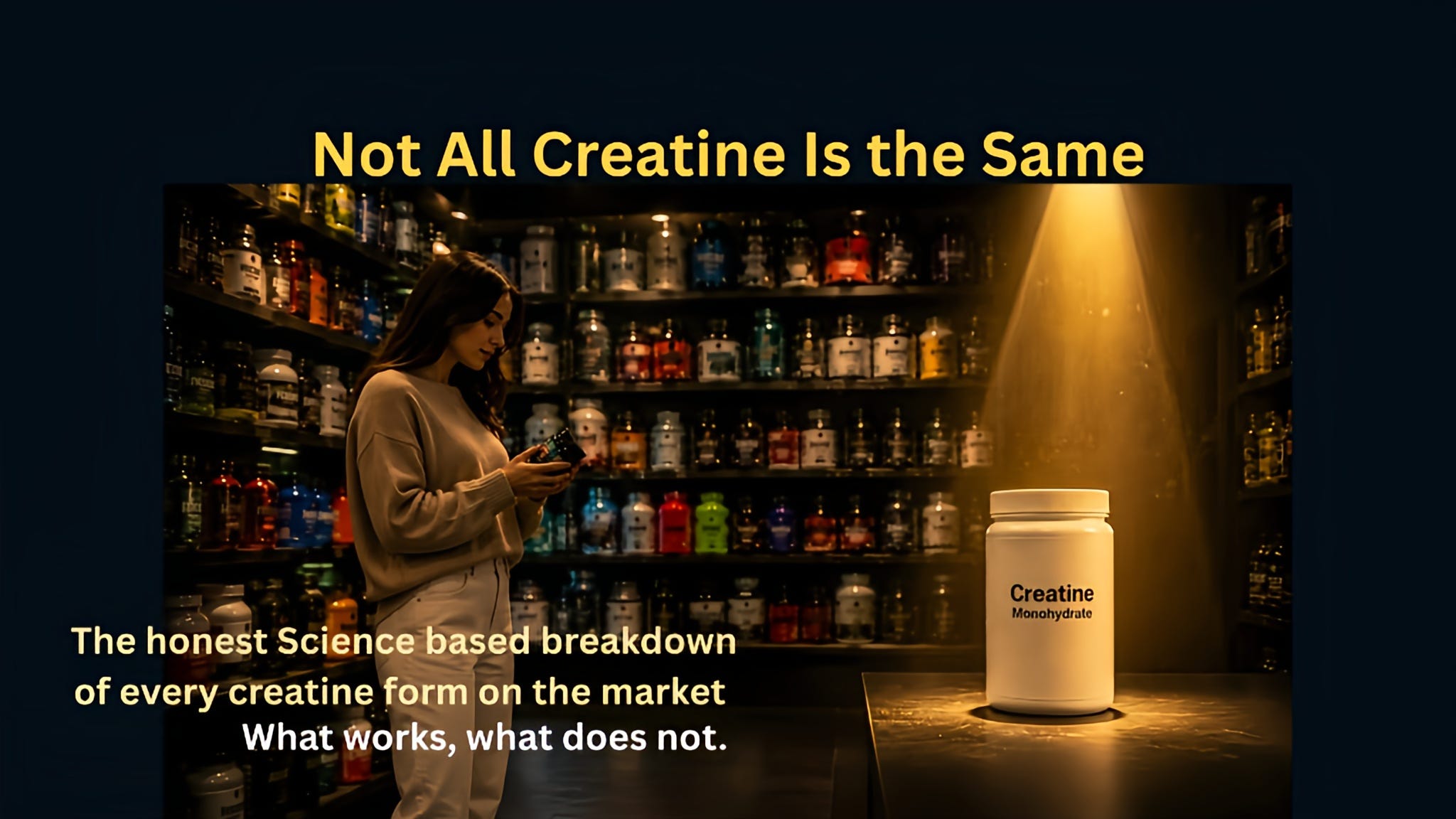
Walk into any supplement store or open any health retailer online, and the creatine aisle will do its best to confuse you. Creatine monohydrate. Creatine HCl. Buffered creatine. Creatine ethyl ester. Creatine nitrate. Creatyl-L-leucine. Each one comes with marketing language that promises superior absorption, faster uptake, less bloating, and better results.
Each one costs more than plain creatine monohydrate.
None of them outperforms it.
That is the short version. The long version is more interesting because the question of how to get creatine into your brain specifically is not the same question as how to get it into your muscles.
This article covers one question: which form of creatine should you actually buy, and why does the rest of the aisle exist if none of it outperforms the cheapest option? The answer is in the evidence, and the evidence is not complicated.
